
Buy PureWax to Make CandlesOnline in India - Bulk & Wholesale
Buy Wax to Make Candles in Bulk
-
 40% OFF
Yellow Beeswax Pellets
Regular price From Rs. 599.00Regular priceUnit price perRs. 1,000.00Sale price From Rs. 599.00Sale -
 50% OFF
White Beeswax Pellets
Regular price From Rs. 749.00Regular priceUnit price perRs. 1,500.00Sale price From Rs. 749.00Sale -
 50% OFF
Soy Wax Flakes
Regular price From Rs. 499.00Regular priceUnit price perRs. 1,000.00Sale price From Rs. 499.00Sale -
 48% OFF
White Beeswax
Regular price From Rs. 719.00Regular priceUnit price perRs. 1,400.00Sale price From Rs. 719.00Sale -
 21% OFF
Carnauba Wax
Regular price From Rs. 1,100.00Regular priceUnit price perRs. 1,400.00Sale price From Rs. 1,100.00Sale -
 51% OFF
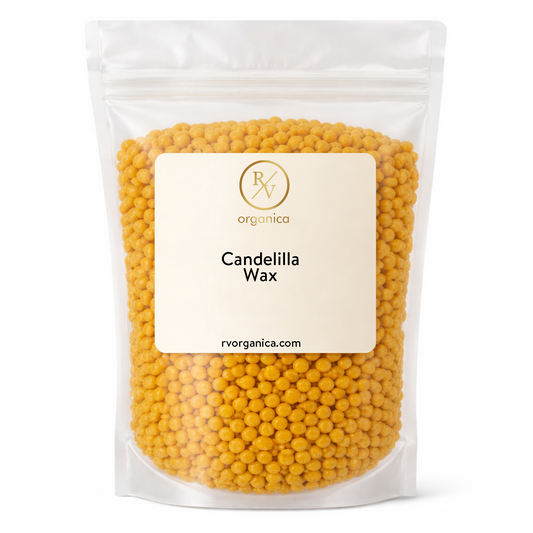
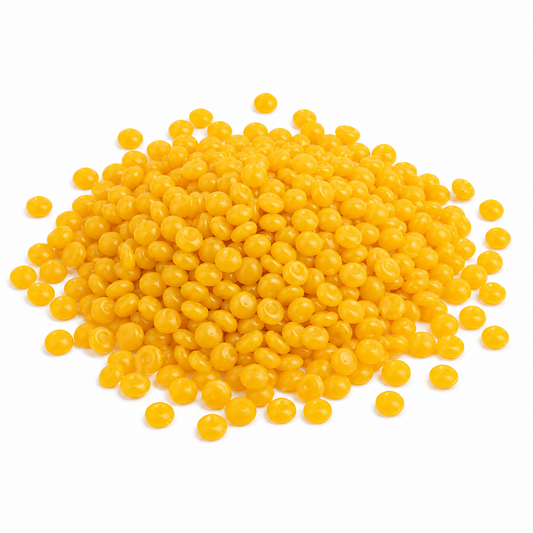
Candelilla Wax
Regular price From Rs. 1,949.00Regular priceUnit price perRs. 4,000.00Sale price From Rs. 1,949.00Sale


 Candle Waxes: Versatile Wax to Make Candles for Home & Business
Quick answer: Choose candle wax by format and climate. Soy and coconut wax suit container candles, paraffin in higher melt-point grades and beeswax suit pillars and votives, and candelilla or gel wax suit specialty work. In Indian summers, soy containers can sweat or soften, so a higher melt-point blend or a small hardener addition helps. Match the wick to the wax and jar diameter, and ask for a COA confirming melting point before bulk orders.
Most guides to candle making wax start with the wrong question. The first question isn't which wax is "best" - it's what format your candle needs to hold, and in what temperature conditions it needs to survive from production through to the end buyer's hands. This collection is part of RV Organica's waxes range, specifically covering waxes for candle use: container, pillar, votive, and artisan formats. The range covers home crafters doing first batches through to small brands managing Diwali supply runs and commercial buyers who need documentation with their orders.
What Are Candle Waxes?
The category is broader than most buyers expect when they first start sourcing. Plant-derived options: soy, coconut, candelilla, palm. Animal-derived: beeswax in yellow and white grades. Petroleum-derived: paraffin in multiple melt-point grades. Then gel wax, which is a semi-synthetic mineral oil base in a different category altogether once you're actually working with it.
What trips buyers up early is the assumption that "natural" means cleaner-burning and stronger-smelling. The clean-burning part is roughly true - soy and beeswax produce less soot than paraffin under similar conditions. The fragrance part isn't. Paraffin accepts a higher fragrance load by weight than most plant-based waxes and projects scent more assertively at room temperature. A soy candle with strong cold throw can disappoint once lit if the fragrance percentage wasn't pushed close to the wax's maximum load capacity, typically 6-10% by weight.
"Natural" also carries no technical meaning in the candle materials space. It isn't regulated, tested, or defined by any Indian or international standard. What actually matters: a Certificate of Analysis (COA) confirming melting point and batch identity, and an MSDS covering flash point and safe storage temperature. A supplier who can provide those two documents for a batch of wax is more useful than one who can't, regardless of what the label says.
What Types of Candle Making Wax Are There?
Wax to Make Candles
Before you get into wax types, the candle format is the more important variable. Container candles need a softer wax that adheres to glass or tin as it cools and contracts. Pillar and molded candles need a firm structure that holds shape after unmolding without cracking along the sides. Trying to make one wax do both usually means compromising on one format.
Blending is normal in production and worth understanding before you start sourcing. Soy-paraffin blends give you soy's cleaner burn alongside paraffin's structural firmness and higher fragrance load. Beeswax blended into a soy base firms it up and extends burn time. The question isn't which single wax to buy - it's which base wax, and whether you need an additive or a second wax to get the performance your format requires.
Soy Wax for Candle Making
Soy wax is hydrogenated soybean oil, sold in flakes or pellets. Melt point lands between 45-55°C depending on grade - container-grade soy is on the softer end, pillar-blend varieties run firmer. It burns with noticeably less soot than paraffin, which is a legitimate advantage for indoor and enclosed-space use.
The thing to know before you commit: soy is prone to frosting, particularly in darker-colored candles, and the fragrance throw is moderate at standard loads. Indian summer conditions above 35°C don't fully melt most container soy waxes, but repeated heat cycling through the day - warm afternoons, cooler nights - degrades surface texture and fragrance retention over time in finished candles stored outside of temperature-controlled spaces. This isn't a product defect. It's a storage and packaging problem that catches people off guard in their first summer production cycle.
Paraffin Wax for Candles
Paraffin exists in multiple melt point grades: softer container grades around 46-50°C and firmer pillar grades at 56-64°C. Its fragrance load capacity runs higher than most natural waxes - typically 8-12% by weight before the oil starts seeping - which is why it still dominates commercial scented candle production at scale.
The soot output is real, not just greenwashing against a competitor. Paraffin does produce more combustion byproducts than soy or beeswax. For an outdoor festival setting or a large container candle in a well-ventilated room, the difference is fairly academic. For a small bedroom candle or a daily-use pooja candle in a closed room, it matters more. Worth thinking through for your specific use case rather than treating the soy-vs-paraffin debate as settled either way.
Beeswax for Candle Making
Yellow beeswax retains the faint honey note of raw honeycomb - which is either an asset or a problem depending on whether you're adding fragrance. For unscented candles, for pooja use, for artisan collections where natural origin is part of the positioning, the honey note is fine. White beeswax is filtered and bleached to remove it, which gives you the same long burn time and bright flame on a neutral base that doesn't interfere with your fragrance blend.
Both grades burn longer and brighter than paraffin or soy at the same candle diameter. In Indian ritual contexts - pooja, offering candles, temple use - beeswax is still the traditional preference, partly because the clean flame and minimal smoke are practically useful in enclosed spaces, not only symbolic.
On the "organic beeswax" question: this designation is genuinely difficult to verify in India. Proper organic certification for beeswax requires documented apiary practices and foraging-range data that most Indian suppliers cannot provide. If it matters for your labelling or your customer's expectations, push for COA documentation rather than taking an organic claim at face value.
Coconut Wax Candles
A 100% coconut wax candle is impractical for most Indian conditions. The melt point sits around 40-45°C for most grades, which means the candle softens or deforms in summer storage and transit without any blending or additives. That's not a failure state unique to cheap batches - it's just physics at Indian ambient temperatures.
Where coconut wax earns its reputation is in blended formulations. Coconut-soy blends hold the creamy texture and high fragrance diffusion coconut wax is known for, while borrowing structural firmness from the soy component. Most candles marketed as "coconut wax" are blends - the label isn't misleading exactly, but it's not the whole story either. For wedding gifting or boutique collections where surface finish matters, a well-formulated coconut blend is worth the additional formulation step. Just don't expect a 100% coconut candle to survive a May transit in an unrefrigerated vehicle.
Candle Wax for Beginners
The most common beginner mistake isn't choosing the wrong wax type. It's over-fragrancing. Most candle waxes accept 6-10% fragrance by weight. Push past that and you get oil seeping through the surface, uneven scent throw, and in some cases a flash point issue if the fragrance oil isn't rated for candle use. More fragrance doesn't produce a stronger candle - it produces problems.
Container-grade soy or a blended beginner container wax is the most forgiving starting point. Both melt predictably on a double boiler at 70-80°C and pour smoothly at 55-65°C. The failure patterns are readable once you know what you're looking at: pinholes usually mean the pour temperature was too high; a sunken centre usually needs a second pour or a slower cooling environment. These patterns repeat consistently enough to diagnose and correct without too much waste.
Start with 250-500 grams before scaling up. Indian clay and terracotta containers absorb heat differently from glass or tin and affect both adhesion and cooling rate - test your chosen container before committing to a larger run.
Candelilla Wax
Candelilla comes from the Euphorbia cerifera shrub and has a melt point of 67-79°C - considerably harder than soy or coconut at room temperature. In candle production, it's used as an additive at roughly 1-3% of batch weight to firm up softer base waxes, not as a base wax itself. For vegan candle lines that need beeswax-free structural support, organic candelilla wax is the practical substitute. It holds well in Indian ambient temperatures without the heat-stability issues that come with softer plant-based waxes - which is a real advantage for summer production runs.
What Are the Uses and Applications of Candle Wax?
Container candles are where most people start, and where most of the India-specific formulation questions come up. The seasonal temperature range is genuinely wider here than in the conditions most international candle-making guides are written for. A formulation that produces a clean, firm surface in December can develop a sticky top or a soft centre by April. Addressing this sometimes means running a slightly firmer wax blend for summer batches, reducing fragrance load by 1-2%, or packaging in ways that protect against temperature exposure in transit. None of these are complicated adjustments once you've identified the problem - but it's easy to spend a few batches blaming the fragrance before realizing the issue is ambient temperature.
Pillar and freestanding candles require firmer wax and a different approach entirely - beeswax, paraffin at the higher melt-point grades, or a specifically formulated pillar blend. Beeswax sheets for hand-rolled candles are worth knowing about: no melting required, accessible for small producers without professional equipment, and there's an established market in India for handmade beeswax tapers in gifting and religious supply.
Gel wax is its own category rather than a variant on standard candle production. It's a transparent mineral-oil base that allows embedded botanicals, glitter, or decorative elements to stay visible through the candle body. The requirements are different: you need non-polar fragrance oils that won't cloud the gel, different pouring technique, and usually a firmer container than standard glass. For novelty gifting and seasonal collections, it works well. As a general replacement for container candle production, it doesn't - the two formats have almost nothing in common technically.
Festive production at scale - Diwali, wedding favors, institutional gifting - tends to favor paraffin for the practical reasons: predictable at volume, high fragrance load capacity, handles color well, and doesn't require the careful temperature management soy needs to avoid frosting on larger pours.
How Do You Choose the Right Candle Wax?
The candle format comes before the wax choice. Container candle: you need a soft wax with a melt point in the 45-54°C range - container-grade soy flakes or a blended container wax. Pillar or molded: firm wax at 56-64°C - paraffin pillar grade, beeswax, or a pillar blend. Specialty formats each have their own requirements: gel wax for transparent designs, candelilla for vegan hardening applications, beeswax sheets for hand-rolled work.
A few buying mistakes worth raising, because they come up regularly:
Ordering without melting point documentation. Melt point ranges vary between batches and suppliers even for the same wax type. If a supplier won't provide COA documentation showing batch-specific melting point, that's a supply consistency problem, not just a paperwork gap.
Assuming fragrance throw is mainly about wax choice. It's not. Wick size, container geometry, fragrance oil quality, and fragrance percentage all matter as much or more. Two paraffin candles with different wick sizes will perform completely differently. A soy candle at 10% fragrance load will outperform a soy candle at 6% if the oil is compatible and the cure time was sufficient.
Testing in December and producing for May. The formulation may not survive the transition. If you're producing for year-round retail or gifting supply, test your finished candle at 38-40°C ambient before locking in the formula.
For wholesale candle wax sourcing, request COA and MSDS documentation before placing volume orders. COA confirms melting point and batch identity. MSDS covers flash point, storage temperature requirements, and handling safety - relevant when storing larger quantities in a warehouse context.
If fragrance oils are part of your production, the candle fragrances range at RV Organica covers fragrance oils tested for candle compatibility.
Storage through Indian summer: below 28-30°C ambient, sealed, away from direct sunlight. For soft waxes in warehouse storage from March through October, some temperature management is practical, not optional.
Which Candle Waxes Are Most Popular and What Are They Best For?
Soy Wax Flakes - melt point at 48-52°C, pours cleanly into glass and tin containers without specialist equipment. The standard starting point for container candle production. Fragrance throw is reliable at 8-10% load; if the cold throw is strong but the hot throw is weak, the issue is usually cure time or pour temperature, not the wax itself.
Yellow Beeswax Pellets - burns longer and brighter than soy at the same candle diameter, with the faint honey note intact. For pooja candles, unscented artisan formats, or gifting collections that lean into natural origin, the honey note is a selling point rather than a problem. Holds well in Indian ambient temperatures without additives, which matters when you're storing stock through April.
White Beeswax Pellets - the same burn quality as yellow beeswax, filtered and bleached to a neutral base. Right choice when the fragrance blend should lead without competing with the wax's own aroma. Most boutique scented beeswax candle production uses the white grade for this reason.
White Beeswax in block form - better suited to large-batch melting and hand-dipped taper production than pellets for volume work. The block format melts more slowly and evenly, which some candle makers find easier to manage across batches at production scale.
Candelilla Wax - used in candle applications as an additive at 1-3% of batch weight to firm up soft base waxes. Not a standalone base, but as a vegan hardening agent for beeswax-free formulations, it's the practical option. Organic grade, COA available.
Browse the complete range at RV Organica's waxes collection.
RV Organica
RV Organica supplies candle waxes from Panipat, Haryana, in quantities from hobbyist to wholesale. COA and MSDS documentation provided with all products. B2B accounts can request order documentation for procurement and compliance. Current stock, batch sizes, and bulk pricing are on the website.
- Choosing a selection results in a full page refresh.
- Opens in a new window.