
Soap Colours
Buy Soap Colours in Bulk
-
 90% OFF
Pink Soap & Candle Colour
Regular price From Rs. 349.00Regular priceUnit price perRs. 3,800.00Sale price From Rs. 349.00Sale -
 90% OFF
Purple Soap & Candle Colour
Regular price From Rs. 349.00Regular priceUnit price perRs. 3,800.00Sale price From Rs. 349.00Sale -
 90% OFF
Red Soap & Candle Colour
Regular price From Rs. 349.00Regular priceUnit price perRs. 3,800.00Sale price From Rs. 349.00Sale -
 90% OFF
Brown Soap & Candle Colour
Regular price From Rs. 349.00Regular priceUnit price perRs. 3,800.00Sale price From Rs. 349.00Sale -
 90% OFF
Blue Soap & Candle Colour
Regular price From Rs. 349.00Regular priceUnit price perRs. 3,800.00Sale price From Rs. 349.00Sale -
 90% OFF
Orange Soap & Candle Colour
Regular price From Rs. 349.00Regular priceUnit price perRs. 3,800.00Sale price From Rs. 349.00Sale -
 90% OFF
Green Soap & Candle Colour
Regular price From Rs. 349.00Regular priceUnit price perRs. 3,800.00Sale price From Rs. 349.00Sale -
 90% OFF
Yellow Soap & Candle Colour
Regular price From Rs. 349.00Regular priceUnit price perRs. 3,800.00Sale price From Rs. 349.00Sale -
 90% OFF
Peach Soap & Candle Colour
Regular price From Rs. 349.00Regular priceUnit price perRs. 3,800.00Sale price From Rs. 349.00Sale -

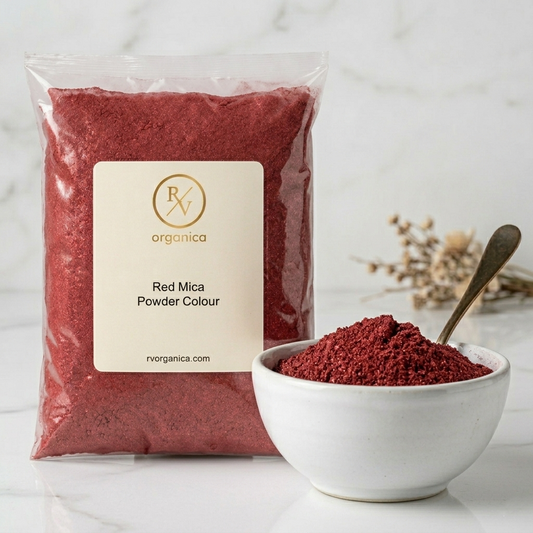 40% OFF
Red Mica Powder
Regular price From Rs. 599.00Regular priceUnit price perRs. 999.00Sale price From Rs. 599.00Sale -

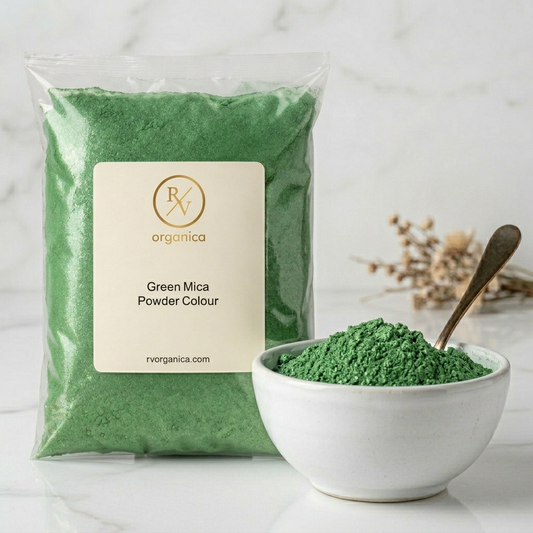 40% OFF
Green Mica Powder
Regular price From Rs. 599.00Regular priceUnit price perRs. 999.00Sale price From Rs. 599.00Sale -

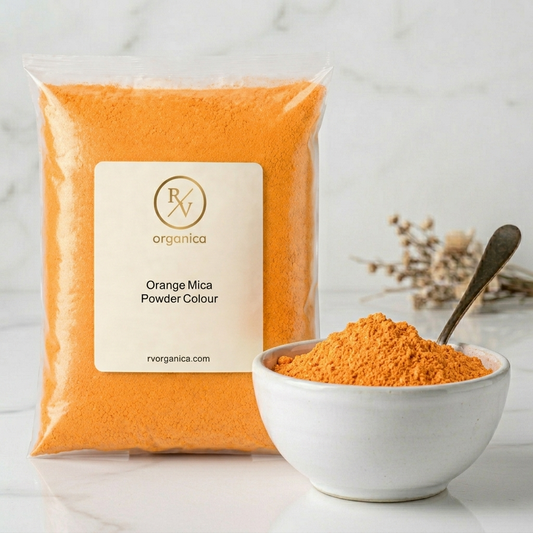 40% OFF
Orange Mica Powder
Regular price From Rs. 599.00Regular priceUnit price perRs. 999.00Sale price From Rs. 599.00Sale -

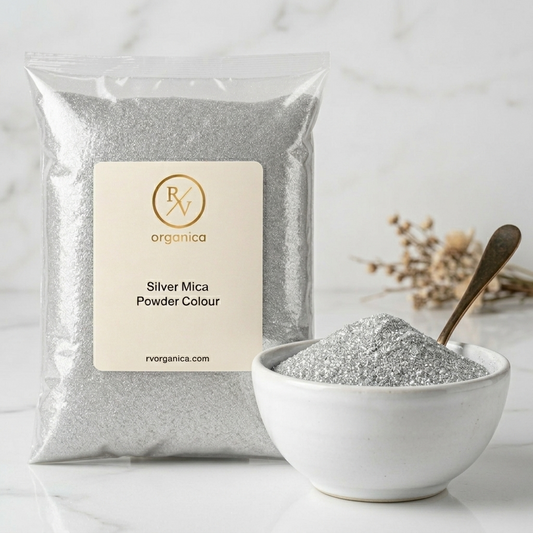 33% OFF
Silver Mica Powder
Regular price From Rs. 999.00Regular priceUnit price perRs. 1,499.00Sale price From Rs. 999.00Sale -

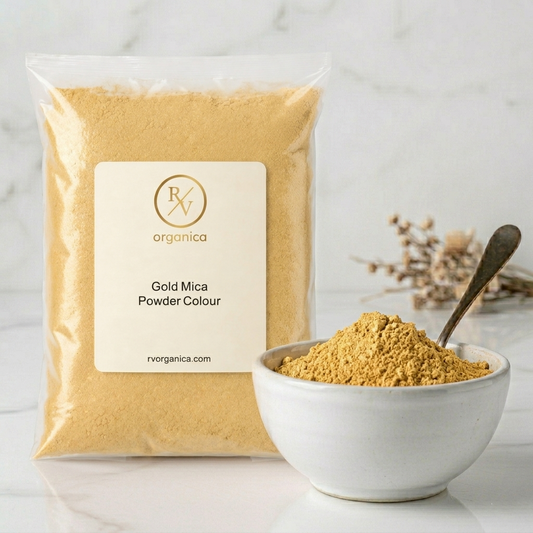 33% OFF
Gold Mica Powder
Regular price From Rs. 999.00Regular priceUnit price perRs. 1,499.00Sale price From Rs. 999.00Sale


About Soap Colours

Soap Colours: Vibrant Soap Dyes & Colorants for Handmade & Commercial Soap Making
Quick answer: Soap colours are concentrated dyes formulated to stay stable in the high-pH environment of soap, where food or fabric dyes separate, bleed, or shift shade. RV Organica's liquid soap dyes come in nine shades: blue, green, orange, peach, pink, purple, red, yellow, and brown, and work in cold process, hot process, and melt and pour. Start with a few drops per 100g of soap base, mix fully, and test a small batch before production.
Liquid soap dye behaves very differently from the food colouring in your kitchen or the fabric dye in a craft kit - and confusing them is the fastest way to end up with streaky, faded bars. These soap colours are specifically formulated for the alkaline environment of soap bases, where ordinary colourants either separate, bleed between layers, or shift shade entirely during curing. This collection is part of RV Organica's candle and soap making supplies, focused on concentrated liquid dyes that work across cold process, hot process, and melt and pour production. Available in nine shades - blue, green, orange, peach, pink, purple, red, yellow, and brown - the same liquid formulations also perform reliably in wax-based candle applications.
What Are Soap Colours?
Soap colours are pigments and dyes formulated to remain stable in high-pH environments - the alkaline conditions created during saponification. That's not a minor technical footnote. A standard food-grade dye that works fine in a lotion or shampoo base will often fade, separate, or change colour entirely in cold process soap, where pH levels can run above 10 during active cure.
The term "cosmetic-grade" gets used a lot in this category, and it's worth unpacking honestly. In India, cosmetic-grade means the ingredient has been evaluated for dermal safety at standard use concentrations. It does not automatically mean the colour is stable at pH 10 or higher, and it says nothing about performance in hot process conditions. Stability at high pH is a separate property that needs to be confirmed - ideally through a COA (Certificate of Analysis) - before any new colorant is committed to a production batch.
Most soap colourants fall into two main categories: synthetic dyes, which are fully soluble and produce even, predictable shading; and pigments, which are insoluble particles requiring pre-dispersion in a carrier oil before use. Liquid soap dye is almost always dye-based, which is why it blends cleanly without the gritty residue that can result from poorly milled powder pigments.
What Types of Soap Colours Are There and What Are They Used For?
The format of a soap colourant matters more than most buyers expect - not just for aesthetics, but for batch scale, production method, and whether the result will be consistent from one order to the next.
Liquid soap dye
Liquid soap dye disperses evenly across the base without grinding, pre-mixing into a carrier oil, or extra processing steps. In melt and pour production, that means you're adding colour directly to molten base and getting a uniform result fast. In cold process, it integrates before trace without clumping, which matters when you're working with swirl designs or multiple colour pours.
One thing worth knowing: liquid dyes can behave unexpectedly in very high-lye concentrations if added before emulsification. Standard practice is to add at trace in cold process, or directly into the melted base in melt and pour. Some shades will shift slightly if introduced too early in hot process, before the cook stabilises the pH. At commercial scale, liquid format simplifies dosing considerably - you can measure in drops or millilitres and hold shade consistency across batches in a way that hand-blended powders make difficult.
Soap making colorants
The broader category of soap making colorants includes liquids, powder pigments, micas, and oxide-based colours. Each format suits a different production approach. Micas give a shimmer effect that liquid dyes don't replicate. Iron oxides and chromium oxide are pH-stable and extremely lightfast, but they require proper oil dispersion first to avoid spotty bars. Liquid dyes skip that step.
For brands producing consistent product lines, liquid colorants support repeatable shade matching in a way that batch-blended powders complicate. That's partly why small-to-medium Indian soap manufacturers tend to move toward liquid formats as their production volumes increase - less variability per batch, easier quality control.
Soap colorants natural
Natural soap colorants - those derived from plant extracts, minerals, or botanical sources - are real options with genuine visual appeal, but this is where honest caveats matter most.
Plant-based colours like turmeric (yellow), indigo (blue-green), and paprika (orange-red) will often fade during cure in cold process soap. The alkaline environment actively degrades many natural pigments. How much they fade depends on the specific extract, the concentration, other additives present in the batch, and even the water content. Mineral-based options like clays and activated charcoal are more stable because they're not pH-sensitive - but they produce muted, earthy tones rather than bright shades.
Green and peach tones from natural sources can work well in herbal and Ayurvedic-positioned soap lines, particularly where a slightly muted, botanical aesthetic fits the product story. That said, if shade consistency across batches is a priority - which it is for any commercial soap operation - synthetic cosmetic-grade dyes will outperform natural options on every practical measure.
RV Organica's current range covers synthetic liquid formulations. If your brand requires plant-based or mineral colorants specifically, sourcing those separately is advisable, with clear documentation of pH stability from whichever supplier you use.
Soap making dye
The term "soap making dye" typically refers to synthetic, water-soluble colourants formulated for the soap environment - distinct from micas (mineral-based pigments) or botanical extracts. Because they dissolve fully, they produce clean, translucent colour in clear melt and pour bases. In opaque bases, the translucency isn't visible, but the evenness of dispersion still affects shade consistency.
For decorative bars where layering, swirling, or colour blocking matters, blue, purple, and orange tend to produce the strongest visual results because of their contrast potential. Precise dosing matters here: at high concentrations, most synthetic dyes will start to bleed at cut edges or cause colour transfer to lather. That's not a problem you'll catch in a 200g test batch, but it shows up at scale.
Which Soap Colour Shades Are Most Popular?
India's handmade soap market has its own seasonal colour logic, and shade selection makes more commercial sense when you think in those terms rather than just aesthetics.
Blue produces clean, fresh results in both transparent and opaque bases and holds up reliably under high-pH conditions - it's one of the more chemically stable shades in this range. Used widely in spa-positioned bars and marine or ocean-themed collections. Effective in clear melt and pour bases where translucency is part of the visual.
Green carries strong associations with herbal, Ayurvedic, and natural soap lines. It's the highest-traffic product in the range by a significant margin, which reflects steady demand from formulators producing neem, aloe vera, and tulsi soap lines. Balanced pigmentation supports consistent results across large production batches.
Orange delivers visible warmth in citrus and festive soap lines. In India, orange-toned bars tend to perform well in the pre-Diwali period and summer gifting hampers. It photographs well in product listings, which matters for small brands selling through Instagram and marketplaces.
Purple suits lavender and floral aromatherapy soap lines. It adds visual depth to layered or marbled bar designs and complements floral fragrance blends effectively. Demand tends to peak around Valentine's and gifting seasons.
Pink creates a soft result that's relatively easy to control at pastel concentrations - easier than most bold shades to dial in consistently. Preferred for wedding favour production, bridal gifting sets, and rose-inspired collections. One of the more forgiving shades for small-batch producers still calibrating their dosing.
Peach sits between pink and orange in visual temperature - warmer than pink, far subtler than orange. Preferred in boutique skincare-positioned soaps and premium bridal gift sets where the aesthetic needs to feel refined. Consistent demand from brands in the luxury gifting segment.
Yellow supports honey, turmeric, and sunflower-inspired bar formulations - themes that have steady demand in India's domestic market. Also a useful layer colour in multi-shade decorative bars when you need a warm mid-tone between orange and white.
Brown suits coffee, chocolate, and cacao-themed soaps. More niche than the other shades, but demand is consistent from artisanal soap brands producing specialty food-inspired bars in the premium segment.
Red adds high contrast for festive and statement bars. Worth noting: red tends to shift noticeably between small test pours and full commercial batches. Minor concentration differences produce visible shade changes. Test at your specific batch size before committing to production runs.
How Do You Choose the Right Soap Colour?
The most common mistake is choosing a shade based on how it looks in the bottle. A colour that performs well in melt and pour may fade or shift in cold process. A shade that looks deep and saturated in a 200g test batch can lighten considerably in a 10 kg production run after the full cure period.
Before committing to full production, test:
- How the dye behaves at trace (cold process) or in melted base (melt and pour)
- Shade stability after a 24-hour cure
- Whether any bleeding occurs at cut bar edges
- Performance with the specific fragrance or essential oil blend in the formulation (some fragrances accelerate trace, compressing the window for adding colour evenly)
Documentation to request from any supplier: Always ask for a COA and MSDS before using any soap colorant in products intended for sale. The COA confirms ingredient identity and purity. The MSDS covers safe handling parameters. In India, where cosmetic ingredient regulations are becoming more rigorous, having both documents on file matters for your own quality control and for any B2B customers who request supplier documentation.
Storage in Indian climate conditions: Liquid dyes stored through March to October - the hottest and most humid months - can experience settling, concentration shifts, or microbial contamination if containers aren't properly sealed. Store in a cool, dry location away from direct sunlight. After extended storage, mix well and run a small test batch before committing to full production.
For bulk and B2B buyers: If you're sourcing bulk soap colours across India for commercial production, the key supplier questions are: Are concentration levels standardised batch-to-batch (so your shade matching holds across repeat orders)? Can they provide batch-specific COA documentation? What are current minimum order quantities and lead times?
For the rest of your soap-making inputs - bases, fragrance, and skin-safe additives - the soap bases range is a natural companion to this collection.
Which Soap Colour Products Are Most Popular?
RV Organica's soap and candle colour range is available in nine concentrated liquid shades. All are formulated for soap making across cold process, hot process, and melt and pour methods - and each works in wax-based candle applications as well.
Green Soap and Candle Colour - The best-selling shade in the range. Strong herbal associations make it the default choice for neem, aloe, and tulsi soap lines. Produces consistent, balanced results in both opaque and clear bases.
Blue Soap and Candle Colour - Chemically stable under high-pH soap conditions. Widely used in spa-positioned and ocean-themed collections; notably effective in clear melt and pour where translucency is part of the visual result.
Orange Soap and Candle Colour - A warm, high-impact shade for citrus formulations and seasonal batches. Demand spikes reliably pre-Diwali and through the summer gifting period; also works well in product photography.
Pink Soap and Candle Colour - Easier to dial in at pastel concentrations than most bold shades. Stays popular for wedding favour production and bridal gifting sets because the dosing is forgiving.
Purple Soap and Candle Colour - Suited to lavender and floral aromatherapy soap lines. Adds depth in layered or marbled bar designs, and a useful counterpoint to lighter shades in multi-colour pours.
Peach Soap and Candle Colour - Warmer than pink, far quieter than orange. The preferred shade in boutique skincare-positioned soaps and premium bridal sets where refined tone matters more than visual intensity.
Yellow Soap and Candle Colour - A supporting shade for honey, turmeric, and sunflower-themed formulations. Reliable layer colour in multi-shade decorative bars where you need a warm mid-tone.
Brown Soap and Candle Colour - Primarily used in coffee, chocolate, and cacao-themed artisanal bar lines. Steady demand from small brands in the specialty soap segment.
Red Soap and Candle Colour - Bold and high-contrast, suited for festive and statement production. Test at your actual batch size - red shifts noticeably between small test pours and larger commercial batches.
Browse all nine shades in the soap and candle colour collection at RV Organica.
About RV Organica
RV Organica supplies soap and candle colours with batch-specific COA and MSDS documentation available on request. Products are stocked in standard retail quantities and bulk supply formats for commercial production. Orders are placed directly through rvorganica.com, with documentation provided alongside shipment. For bulk enquiries or wholesale pricing, contact details are available on the website.
- Choosing a selection results in a full page refresh.
- Opens in a new window.
