
Buy PureBody Massage OilsOnline in India - Bulk & Wholesale
Buy Body Massage Oils in Bulk
-

 16% OFF
Romance Massage Oil
Regular price From Rs. 999.00Regular priceUnit price perRs. 1,200.00Sale price From Rs. 999.00Sale -

 28% OFF
Peppermint Massage Oil
Regular price From Rs. 999.00Regular priceUnit price perRs. 1,400.00Sale price From Rs. 999.00Sale -
 30% OFF
Sensual Couple Massage Oil
Regular price From Rs. 349.00Regular priceUnit price perRs. 499.00Sale price From Rs. 349.00Sale -

 16% OFF
Lavender Massage Oil
Regular price From Rs. 999.00Regular priceUnit price perRs. 1,200.00Sale price From Rs. 999.00Sale -

 46% OFF
Relaxation Massage Oil
Regular price From Rs. 699.00Regular priceUnit price perRs. 1,300.00Sale price From Rs. 699.00Sale -

 45% OFF
Rose Geranium Massage Oil
Regular price From Rs. 599.00Regular priceUnit price perRs. 1,100.00Sale price From Rs. 599.00Sale -

 0% OFF
Jojoba Massage Oil
Regular price From Rs. 999.00Regular priceUnit price perRs. 1,000.00Sale price From Rs. 999.00Sale -

 45% OFF
Sesame Massage Oil
Regular price From Rs. 649.00Regular priceUnit price perRs. 1,200.00Sale price From Rs. 649.00Sale -

 45% OFF
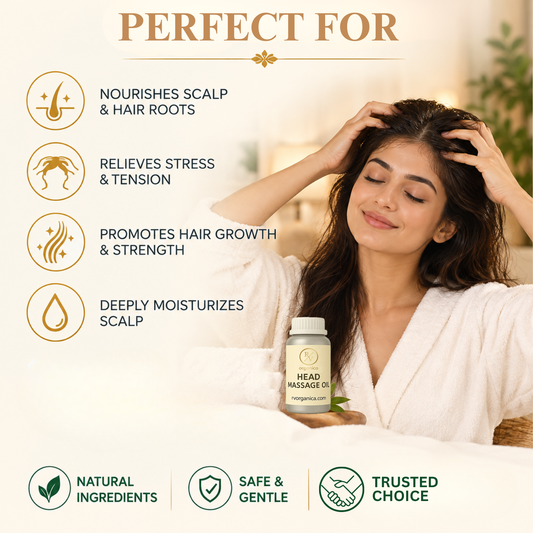
Head Massage Oil
Regular price From Rs. 599.00Regular priceUnit price perRs. 1,100.00Sale price From Rs. 599.00Sale -

 50% OFF
DeStress Massage Oil
Regular price From Rs. 749.00Regular priceUnit price perRs. 1,500.00Sale price From Rs. 749.00Sale -

 41% OFF
Sandalwood Turmeric Massage Oil
Regular price From Rs. 649.00Regular priceUnit price perRs. 1,100.00Sale price From Rs. 649.00Sale -

 41% OFF
Grapeseed Massage Oil
Regular price From Rs. 649.00Regular priceUnit price perRs. 1,100.00Sale price From Rs. 649.00Sale -

 45% OFF
Coconut Hibiscus Massage Oil
Regular price From Rs. 649.00Regular priceUnit price perRs. 1,200.00Sale price From Rs. 649.00Sale -

 45% OFF
Castor Massage Oil
Regular price From Rs. 599.00Regular priceUnit price perRs. 1,100.00Sale price From Rs. 599.00Sale -

 45% OFF
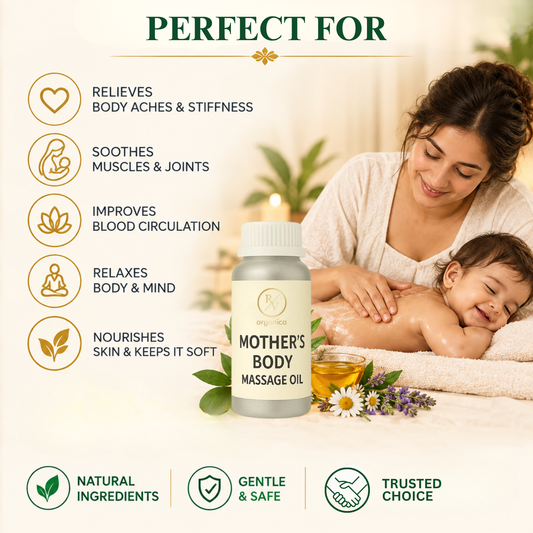
Mother's Body Massage Oil
Regular price From Rs. 599.00Regular priceUnit price perRs. 1,100.00Sale price From Rs. 599.00Sale -

 45% OFF
Olive Massage Oil
Regular price From Rs. 599.00Regular priceUnit price perRs. 1,100.00Sale price From Rs. 599.00Sale -

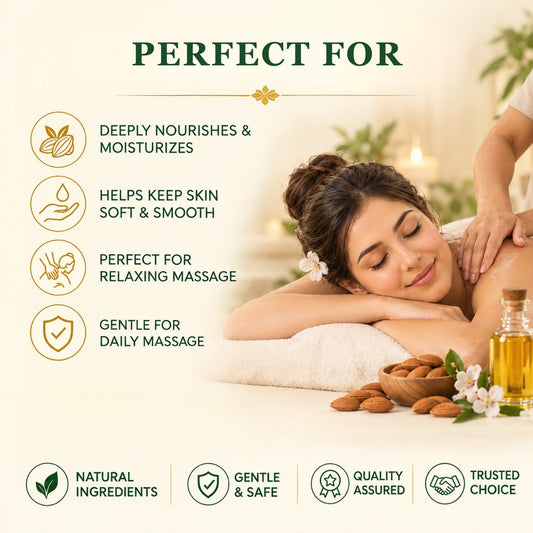 50% OFF
Almond Massage Oil
Regular price From Rs. 649.00Regular priceUnit price perRs. 1,300.00Sale price From Rs. 649.00Sale -

 50% OFF
Til Massage Oil
Regular price From Rs. 649.00Regular priceUnit price perRs. 1,300.00Sale price From Rs. 649.00Sale -

 42% OFF
Coconut Massage Oil
Regular price From Rs. 629.00Regular priceUnit price perRs. 1,100.00Sale price From Rs. 629.00Sale -

 48% OFF
Jasmine Massage Oil
Regular price From Rs. 519.00Regular priceUnit price perRs. 1,000.00Sale price From Rs. 519.00Sale


Massage Oil Guide: Natural Body Massage Oils for Relaxation & Daily Abhyanga in India
Quick answer: Massage oil is a water-free oil, single or blended, that gives friction-free glide while moisturising the skin. Choose by the base oil, not the scent: sesame is the traditional Abhyanga oil for cooler months, coconut suits hot and humid weather, and almond is a gentle all-round option. Warm the oil slightly, apply 10 to 20 ml for a full-body massage, and leave it on for 15 to 30 minutes before bathing.
Most buyers searching for massage oil in India make the same mistake: choosing by scent or label language rather than by what the base oil actually does on skin. A sesame and an almond massage oil are both common massage bases, and they are genuinely different products with different absorption rates, seasonal suitability, and traditional uses. This collection covers both pure carrier-based massage oils and blended formulations, arranged so you can match what you buy to what you actually want to achieve.
What Is Massage Oil?
Massage oil is a lipid-based formulation, a single oil or a blend, applied to skin to allow friction-free massage movement while delivering moisture and, in some cases, plant-derived compounds to the skin barrier. Unlike lotions and creams, massage oils contain no water, so they sit on the skin longer and provide sustained glide rather than absorbing immediately.
The category is broader than people expect. Cold-pressed sesame used in traditional Abhyanga is a massage oil. A blended jojoba and jasmine formulation for couples is also a massage oil. What they share is a carrier base that allows the sustained contact and movement of good massage technique.
Common confusion: massage oils are not essential oils. Lavender, eucalyptus, and peppermint are volatile aromatic concentrates. They can be added to massage oils at safe dilutions, but applying them neat to skin is a different matter. If something is labelled "massage oil" and the ingredient list shows only an essential oil without a carrier base, read it carefully before use.
In India, the words "herbal," "natural," and "organic" carry no regulated meaning for topical oils. What actually signals quality is batch testing documentation, specifically a COA from the supplier: a batch-specific document showing what is in that particular production run.
What Are the Benefits of Massage Oil in India?
Benefits vary by oil type and how you use it. A slow Abhyanga with warm sesame before bathing is a distinct practice from a post-gym almond oil rub or a couples session with a scented jojoba blend, and the results differ accordingly.
Best Massage Oil for Men
Sesame is the traditional default: it has good glide, medium density, and a mild warming quality that suits the sustained strokes of a full-body massage or self-massage routine. The practical limit is seasonal, since sesame can sit heavier on skin from March through September in most parts of India.
Almond absorbs within 20 to 30 minutes, leaves skin conditioned without a heavy film, and works as a daily grooming oil. Jojoba is technically a liquid wax, not a true oil, and absorbs fastest of the three. For men who want moisture without anything that interferes with clothing or a skincare step, jojoba is the most practical option.
For post-workout use, deep tissue massage needs sustained glide, which jojoba alone may not give. Sesame with peppermint essential oil diluted to around 2% (about 10 to 12 drops per 30 ml of carrier) provides both the glide and the warming-cooling sensation associated with muscle recovery. At this dilution, essential oils act as counter-irritants on the skin surface; they do not penetrate to muscle fibre.
Best Body Oil for Dry Skin in India
Almond and olive are the two options worth focusing on for dry skin. Almond leaves a conditioning film without a heavy feel. Olive is thicker and more occlusive, better for severely dry or mature skin; it sits on the surface longer, which suits overnight use but can feel heavy during the day.
India's seasons matter here. In the northern plains and central regions, winters from roughly October through February are hard on skin: humidity drops, and the gap between day and night temperatures can tighten even oily skin. Applying warm oil to slightly damp skin right after bathing, rather than fully towel-dried skin, makes a noticeable difference in how much absorbs and how long the effect lasts.
Coconut oil is popular but gives a shallower moisturising effect than almond or olive for genuinely dry skin. It works for normal to slightly dry skin in moderate conditions.
Ayurvedic Body Massage Oil
Ayurvedic body massage oil traditionally means a sesame base, applied warm, as part of Abhyanga. Sesame is classed as warming in Ayurveda, the default for vata-dominant constitutions and for the cooler months. In some northern and eastern Indian traditions, mustard oil is used instead for its strongly warming quality.
The classical method: warm the oil to slightly above body temperature, work from the extremities inward in long strokes toward the joints, leave it on for 15 to 20 minutes, then take a warm bath. Cold-pressed sesame differs from refined sesame, because refining removes lignans and some natural antioxidants that cold-pressed oil retains.
Massage Oil for Muscle Pain
For muscle-focused work, a sesame base gives sustained glide and holds warmth well for deeper pressure. Adding eucalyptus or peppermint essential oil at 2% creates a warming-cooling counter-irritant sensation that many people find useful after physical activity, which is why Peppermint Massage Oil is a popular post-workout choice. Mustard oil is the traditional alternative, but it can irritate sensitive skin on extended contact. Patch test on the inner forearm before a full session. Keep expectations realistic: the sensation is real, but topical oils work at the surface and do not reach muscle tissue.
Natural Massage Oil for Relaxation
Across most of India, coconut is the default choice for relaxation massage: familiar, light in texture, and mild in scent. It has good slip and suits slow, calming strokes. Coconut solidifies below about 24°C, so in northern India it turns semi-solid from November through February and needs gentle warming before use.
Almond stays liquid year-round at Indian room temperatures and absorbs more slowly, which extends the working time in a relaxation massage. Paired with lavender or chamomile essential oil at 1.5 to 2%, it makes a simple calming blend. For a ready-made option, try Relaxation Massage Oil or Lavender Massage Oil.
Massage Oil for Couples
Almond and jojoba are both practical bases. Almond provides enough slip for sustained massage; jojoba absorbs without residue. Neither has a strong base scent, which makes them good carriers if you want to add your own essential oils.
With a pre-blended formula, check the essential oil concentration. The standard safe range for body massage is 1.5 to 3%. Above that, particularly with strong materials like ylang ylang, cinnamon, or clove, repeated use can cause sensitisation. A well-formulated couples massage oil lists its ingredients in descending order, which gives an approximate picture of concentration.
Massage Oil Comparison: Which Base Oil Suits You?
| Base oil | Texture & absorption | Best season in India | Best for |
|---|---|---|---|
| Sesame (Til) | Medium-heavy, slow absorbing, long glide | October to February | Abhyanga, dry skin, full-body massage |
| Sweet almond | Medium, absorbs in 20 to 30 minutes | All year | Full-body massage, dry skin, relaxation |
| Coconut | Light, fast absorbing, solidifies below 24°C | March to September | Relaxation, hot and humid weather |
| Jojoba | Light liquid wax, fastest absorbing, no residue | All year | Couples massage, oily or combination skin, after-massage conditioning |
| Olive | Heavy, occlusive, slow absorbing | October to February | Very dry or mature skin, overnight use |
| Grapeseed | Very light, fast absorbing | All year | Oily skin, quick massage, blending base |
How to Make Your Own Massage Oil Blend
A simple home blend needs only a carrier oil and one or two essential oils. For a 2% body massage blend, add 10 to 12 drops of essential oil to 30 ml of carrier oil; for sensitive skin, children over 2, or daily facial use, stay at 1% (5 to 6 drops per 30 ml). Mix in a clean amber glass bottle, shake gently, and patch test before the first use. Use RV Organica's essential oil dilution calculator to work out exact drops for any bottle size, and pick a base from our carrier oils range.
- Relaxing blend: 30 ml almond oil + 6 drops lavender + 4 drops chamomile
- Post-workout blend: 30 ml sesame oil + 6 drops peppermint + 4 drops eucalyptus
- Couples blend: 15 ml almond + 15 ml jojoba + 5 drops ylang ylang + 5 drops sandalwood
Which Body Massage Oils Are Most Popular and What Are They Best For?
These products are part of RV Organica's massage oil range, arranged by their most practical use:
Sesame Body Massage Oil: Dense and warming, the oil Abhyanga practitioners typically prefer. The texture provides sustained glide for slow, rhythmic strokes. Best for cooler months and dry to normal skin.
Almond Oil for Body Massage: Absorbs within 20 to 30 minutes on most skin types, leaves a soft conditioning effect, and needs no warming before use. It works across grooming, dry skin care, and general massage.
Jojoba Massage Oil: A wax ester rather than a triglyceride oil, so it absorbs quickly, leaves almost no residue, and resists oxidation, giving a longer shelf life. The trade-off is less glide during a long session, so it suits lighter massage and after-massage conditioning.
Fat Burning Massage Oil: Formulated to support body contouring massage routines. To be clear, topical oils improve local circulation; they do not metabolise body fat. Use it alongside a routine, not as a standalone treatment.
Romance Massage Oil: A scented blend built for couples. Its texture sits between almond and jojoba, with enough slip for sustained massage and a reasonable absorption window.
Sensual Couple Massage Oil: One of the most purchased products in this range. Balanced texture and a soft scent; for professional or spa use, the bulk sizes make more sense.
Relaxation Massage Oil: Made for calming use, with a quieter scent profile aimed at winding down, pre-sleep, or stress relief. Works for self-massage as well as partnered sessions.
How Do You Choose the Right Body Massage Oil?
The most common mistake is choosing by label language. "Natural," "herbal," and "pure" are largely unregulated descriptors in India and say more about the marketing budget than the product.
Abhyanga practitioners almost always use sesame, cold-pressed over refined, warmed before use. Dry skin choices split between almond (faster absorption, lighter feel) and olive (richer, better for severely dry or mature skin). For muscle-focused massage, use sesame with a 2% peppermint or eucalyptus blend. For relaxation or couples use, almond or jojoba works better: lighter, faster absorbing, and a clean canvas for essential oils.
Storage in Indian conditions: Most vegetable oils go rancid faster in heat, so keep open bottles away from direct sunlight, especially from April through September. Sesame and jojoba are comparatively shelf-stable; almond and olive are more sensitive to heat and light. Coconut oil is highly stable but solidifies in winter.
Massage Oil for Spas, Salons & Bulk Buyers
Every massage oil in this collection is available in retail packs from 500 ml and in bulk packs of 1 kg, 5 kg, 10 kg, 20 kg, and 25 kg for spas, salons, Ayurvedic centres, physiotherapists, and resellers. Private label and custom-blend production is also available for wellness brands. When sourcing in bulk, ask for a batch-specific COA and MSDS: the COA shows batch origin, testing date, and purity parameters, and the MSDS covers safe handling. For bulk pricing or a custom formulation, message us on WhatsApp or email info@rvorganica.com.
About RV Organica
RV Organica manufactures and supplies body massage oils in retail and bulk packaging from its facility in Panipat, Haryana. COA and MSDS documentation is available on request for every batch, and custom private-label packaging is available for business orders.
- Choosing a selection results in a full page refresh.
- Opens in a new window.