
Buy PureFloral watersOnline in India - Bulk & Wholesale
Buy Floral waters in Bulk
-

 46% OFF
Sandalwood Hydrosol
Regular price From Rs. 639.00Regular priceUnit price perRs. 1,200.00Sale price From Rs. 639.00Sale -

 46% OFF
Lavender Hydrosol
Regular price From Rs. 639.00Regular priceUnit price perRs. 1,200.00Sale price From Rs. 639.00Sale -

 49% OFF
Rosemary Hydrosol
Regular price From Rs. 709.00Regular priceUnit price perRs. 1,400.00Sale price From Rs. 709.00Sale -
 11% OFF
Rose Floral Water
Regular price From Rs. 709.00Regular priceUnit price perRs. 799.00Sale price From Rs. 709.00Sale -

 49% OFF
Coffee Hydrosol
Regular price From Rs. 709.00Regular priceUnit price perRs. 1,400.00Sale price From Rs. 709.00Sale -

 49% OFF
Cucumber Hydrosol
Regular price From Rs. 709.00Regular priceUnit price perRs. 1,400.00Sale price From Rs. 709.00Sale -


Frankincense Hydrosol
Regular price From Rs. 839.00Regular priceUnit price perRs. 400.00Sale price From Rs. 839.00 -


Rose Hip Hydrosol
Regular price From Rs. 709.00Regular priceUnit price perRs. 400.00Sale price From Rs. 709.00 -

 49% OFF
Tea Tree Hydrosol
Regular price From Rs. 709.00Regular priceUnit price perRs. 1,400.00Sale price From Rs. 709.00Sale -


Lemongrass Hydrosol
Regular price From Rs. 639.00Regular priceUnit price perRs. 400.00Sale price From Rs. 639.00 -

 49% OFF
Clove Hydrosol
Regular price From Rs. 709.00Regular priceUnit price perRs. 1,400.00Sale price From Rs. 709.00Sale -


Peppermint Hydrosol
Regular price From Rs. 709.00Regular priceUnit price perRs. 400.00Sale price From Rs. 709.00 -


Orange Hydrosol
Regular price From Rs. 709.00Regular priceUnit price perRs. 400.00Sale price From Rs. 709.00 -


Olive Leaf Hydrosol
Regular price From Rs. 709.00Regular priceUnit price perRs. 400.00Sale price From Rs. 709.00 -


Papaya Leaf Hydrosol
Regular price From Rs. 639.00Regular priceUnit price perRs. 300.00Sale price From Rs. 639.00 -


Patchouli Hydrosol
Regular price From Rs. 709.00Regular priceUnit price perRs. 300.00Sale price From Rs. 709.00 -
 50% OFF
Neem Hydrosol
Regular price From Rs. 699.00Regular priceUnit price perRs. 1,400.00Sale price From Rs. 699.00Sale -
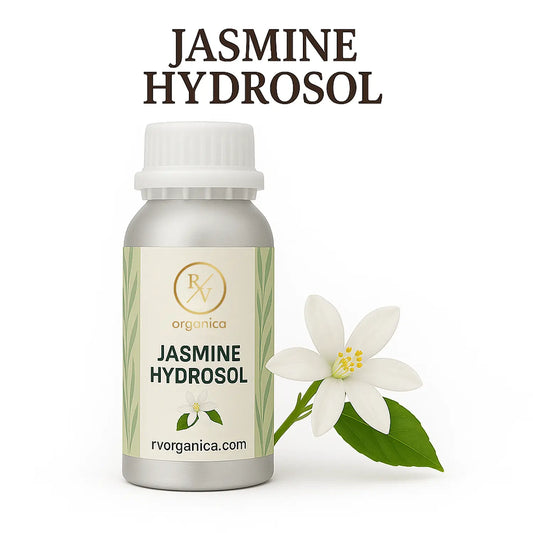
Jasmine Hydrosol
Regular price From Rs. 1,062.00Regular priceUnit price perRs. 400.00Sale price From Rs. 1,062.00 -

 47% OFF
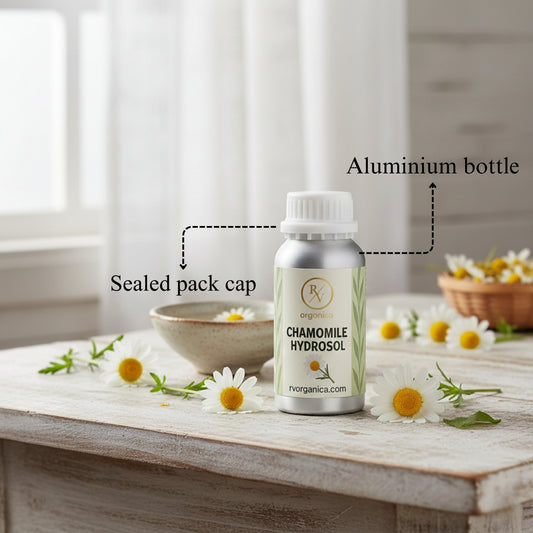
Chamomile Hydrosol
Regular price From Rs. 839.00Regular priceUnit price perRs. 1,600.00Sale price From Rs. 839.00Sale -

 47% OFF
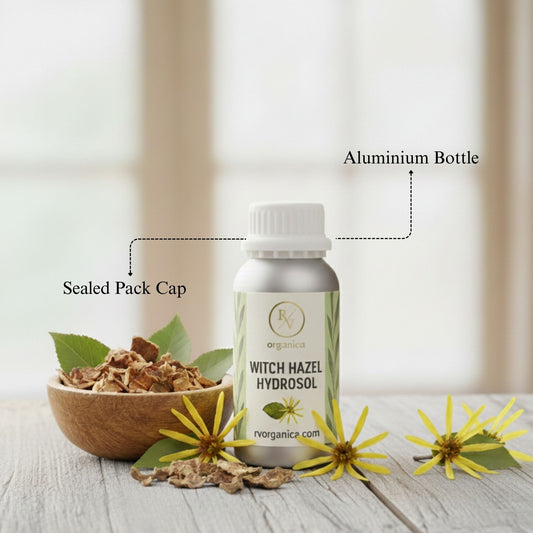
Witch Hazel Hydrosol
Regular price From Rs. 839.00Regular priceUnit price perRs. 1,600.00Sale price From Rs. 839.00Sale


Floral Waters & Hydrosols
Quick answer: A genuine floral water, or hydrosol, is the water collected during steam distillation of plant material, not rose oil stirred into plain water. It carries water-soluble plant compounds, is mildly acidic, and can be used directly as a toner, face mist, hair rinse, or water phase in formulations. RV Organica stocks over 30 steam-distilled floral waters, from rose, lavender, and peppermint to papaya leaf, patchouli, and coffee. Refrigerate after opening in Indian summers.
Most "rose water" sold in Indian markets - grocery stores, general platforms, even some specialty suppliers - is not a hydrosol. It's rose oil or absolute stirred into plain water. That distinction sounds minor until you're formulating a product with it, or applying it to reactive skin, or trying to source consistently at scale. A genuine floral water hydrosol comes from steam distillation, and the water that condenses from that process is chemically different from anything you make by mixing.
RV Organica stocks over 30 floral waters and hydrosols from direct steam distillation - ranging from everyday varieties like rose, lavender, and peppermint floral water to less commonly sourced options like papaya leaf, patchouli, and coffee hydrosol.
What Is a Floral Water Hydrosol?
During steam distillation, plant material - flowers, leaves, bark, roots - is exposed to pressurized steam. The steam pulls volatile aromatic compounds through a condenser, where it cools and separates. The essential oil floats at the top. The water below it is the hydrosol.
The two terms are used interchangeably in most markets. "Hydrosol" is technically more precise - it covers distillates from non-flowering plants, whereas "floral water" historically implied flower-based sources. In practice, the words describe the same thing: the water-phase condensate from distillation.
What's actually in that water matters. Hydrosols contain water-soluble aromatic molecules - terpene alcohols, organic acids, aldehydes - that don't transfer into the essential oil because they're hydrophilic. This is why lavender hydrosol and lavender essential oil have related but different aromatic profiles. The hydrosol tends to be milder, slightly acidic, and behaves differently in a formulation context.
One thing worth knowing upfront: "hydrosol" is not a regulated term anywhere in India or globally. A product labeled "rose hydrosol" with no documentation could be distilled water with rose fragrance added. For skincare or cosmetic formulation use, ask for a COA (Certificate of Analysis) and MSDS (Material Safety Data Sheet) before purchasing. Without both, there's no way to know what you're actually buying.
How Are Floral Waters Made and Why Does the Source Matter?
Most hydrosols on the Indian market are byproducts. The distiller's primary target was the essential oil; the water that collected below it got bottled. That's not inherently a problem, but it does affect consistency and quality.
Dedicated hydrosol distillation - where the water phase is the intended product from the start - tends to produce cleaner aromatic profiles and better batch-to-batch consistency. Byproduct hydrosols sometimes get diluted with additional water to increase volume, or pick up suspended plant particulate that gets filtered out imperfectly. Without batch documentation, there's no way to differentiate.
The plant source matters too. Peppermint floral water distilled from fresh leaf in season smells noticeably different from one processed from dried or aging plant material. For home users applying a face mist, this is mostly an aesthetic concern. For brands formulating a consistent product across SKUs, it's a sourcing risk that compounds over time. If you're building a product around a specific hydrosol, establishing which distillation run a batch came from should be part of your supplier conversation.
How Are Floral Waters Used for Skin and Hair?
As a Facial Toner
Hydrosols are probably most commonly used as toners in India right now, and most can be applied directly without dilution - this is one of their practical advantages over essential oils, which almost always require a carrier. That said, "most" isn't "all." Clove hydrosol and cinnamon hydrosol carry more active compounds than typical flower-based varieties and can cause irritation in people with sensitive or reactive skin. A 24-hour patch test on the inner arm before widespread use is worth doing regardless.
What hydrosols do well as toners: they hydrate, they're mildly pH-balancing (genuine hydrosols typically sit between pH 4.5 and 6.5), and some carry mild antimicrobial or astringent properties. What they don't do: they're not chemical exfoliants, they won't perform like a retinol or vitamin C serum, and the aromatic compounds in most hydrosols are present at concentrations well below what clinical research has studied for therapeutic effects. Use them because they feel good and work into a routine cleanly - the evidence for specific clinical outcomes is thinner than the marketing language often implies.
Seasonal note: from April through October in most of India, refrigerate your hydrosol toners once opened. Room temperature storage during peak heat months accelerates spoilage significantly faster than most shelf-life labels account for.
For Hair Rinse and Scalp Care
Rosemary hydrosol as a post-wash rinse has picked up considerable interest recently - partly driven by the broader rosemary-for-hair-growth conversation. The hydrosol version is milder than rosemary essential oil and doesn't need dilution in a carrier before application to scalp. Whether it genuinely promotes hair growth is harder to answer than the trend content suggests. Most of the research behind rosemary's hair-growth reputation used the essential oil, not hydrosol, and looked at sustained topical contact over months. A rinse-off product delivers a fraction of that contact time. The mechanism being studied - increased scalp microcirculation - likely requires longer dwell time than a rinse provides.
Neem hydrosol, on the other hand, has a stronger case for dandruff-prone scalps, given neem's documented antifungal properties. Hibiscus hydrosol gets used as a conditioning rinse in traditional Indian hair care - it absorbs quickly without the heaviness that oil-based treatments leave behind, which is genuinely useful in humid seasons. Jasmine hydrosol has a following for its scent in hair misting, though the functional benefits there are mostly aesthetic.
How Do You Choose a Floral Water Hydrosol?
Documentation first. Any supplier providing hydrosols for skincare or cosmetic use should supply a COA and MSDS for each batch. The COA should include pH, microbial count, and ideally the plant source and distillation method. An MSDS covers handling and storage. If a supplier can't produce both on request, that's the answer to whether you should order.
Check the pH. A genuine hydrosol is slightly acidic - typically 4.5 to 6.5. A neutral reading (around 7) on something labeled as hydrosol strongly suggests distilled water with added fragrance. You can verify this at home with a basic pH strip. Not dangerous, but not what you're paying for.
Storage in Indian conditions matters more than the label says. Most unpreserved hydrosols are rated for 6-12 months from distillation under ideal conditions - cool, dark, away from light. In India, those conditions don't exist in a typical home from April to September. Even a sealed bottle at room temperature in summer can develop microbial changes well inside that window. Signs of spoilage: cloudy appearance, an off or sour smell, visible particulate. Refrigerate after opening. During peak heat, order in quantities you'll use within 2-3 months.
For brands and formulators: byproduct hydrosols are common and not inherently inferior, but ask your supplier whether the batch you're sourcing was a dedicated distillation run or a co-distillation byproduct. For consistency across reformulations, dedicated runs are preferable. The per-litre price difference rarely justifies the sourcing inconsistency risk when you're building a product that customers will repurchase expecting the same experience.
Which Floral Waters and Hydrosols Are Most Popular?
Coffee Hydrosol Natural Toner - Pale amber in color, distinctly coffee-scented, and consistently one of the most-asked-about hydrosols for oily and acne-prone skin. The evidence base for specific skin benefits is mostly anecdotal at this point, but the product has built a real following. Not everyone wants their face mist to smell like a café, so that's worth knowing before ordering. Available in multiple sizes.
Sandalwood Hydrosol - Sandalwood hydrosol carries a lighter, more fleeting version of the wood's characteristic scent. If you've experienced sandalwood essential oil or attar, manage expectations - the hydrosol is substantially milder. It's used in toners, mists, and after-sun preparations where a heavy sandalwood note would be too much anyway.
Frankincense Organic Floral Water Hydrosol - The aromatic profile here is milder than frankincense essential oil - a bit citrus-edged, resinous without being heavy - which makes it usable as a daily toner where the oil would be too concentrated for undiluted application. It's used in anti-aging formulations, though the research on frankincense compounds for skin regeneration is still largely preliminary. COA available at batch level.
Organic Rose Floral Water - The most recognizable entry point for people new to hydrosols, and one of the most misunderstood. This is steam-distilled from organic rose petals - not a dilution of rose essential oil in water. That's not a small distinction for formulators building a skincare line or anyone trying to source consistently. Works as a face mist, toner, or hydrophase in emulsions.
Rosemary Hydrosol Organic Hair Growth - Primarily sought for scalp application and post-wash rinse use. Mild enough for direct use without a carrier. The hair-growth association comes from essential oil research, not hydrosol-specific data - worth knowing if you're purchasing with specific outcome expectations. As a scalp refreshing spray and aromatic rinse, it works consistently well.
Hibiscus Hydrosol - Bright, slightly tart-smelling, and recognizable to anyone who's used hibiscus in traditional Indian hair care. The hydrosol version is lighter than oil-based hibiscus preparations and absorbs without residue - useful in humid months when heavier products feel uncomfortable. Also used in skin brightening preparations and facial mists.
Lemongrass Hydrosol - Sharp citrus-green aroma that translates cleanly from the plant into the hydrosol. Used as a skin toner, room mist, and a natural insect-repellent spray during monsoon months. Antimicrobial properties of lemongrass have been documented in research - at essential oil concentrations. The hydrosol is considerably milder, so the practical effect as a sanitizing spray is lower than some product descriptions suggest.
The complete range - 30+ floral waters and hydrosols - is available on this page. For bulk or wholesale enquiries, contact RV Organica directly.
About RV Organica
RV Organica supplies steam-distilled floral waters and hydrosols in packaging from 100ml to bulk quantities. COA and MSDS documentation is available for every batch - request it before placing a first order. Products are tested at the batch level for pH and microbial safety before dispatch. Orders include batch references, which supports traceability for brands sourcing across multiple product lines.
- Choosing a selection results in a full page refresh.
- Opens in a new window.