


Rosehip Oil for Hair Repair – Cold Pressed
Cold Pressed & Unrefined | Rich in Linoleic Acid & Natural Vitamin A (Trans-Retinoic Acid) | Fast-Absorbing Repair Formula | For Damaged, Frizzy & Color-Treated Hair
- Unlock 10% OFFON FIRST ORDER ABOVE ₹1499
- Flat 10% OFF Navratri SaleOn all orders
- Flat 12% OFFABOVE ₹25,000
- Flat 13% OFFABOVE ₹50,000
- Flat 14% OFFABOVE ₹75,000
- Flat 15% OFFABOVE ₹1,00,000
Need large quantity? Contact us for bulk orders →
Couldn't load pickup availability
Frequently Bought Together

Rosehip Oil for Hair Repair – Cold Pressed
Rs. 349.00

Rosemary + Vitamin E + Tea Tree — Hair Growth & Care Combo
Rs. 999.00

Rosemary Ricewater Hair Spray
Rs. 249.00





Our Certifications


Recently Viewed
Rosehip Oil Cold Pressed, 100% Pure and Natural for Face, Nails, Hair and Skin
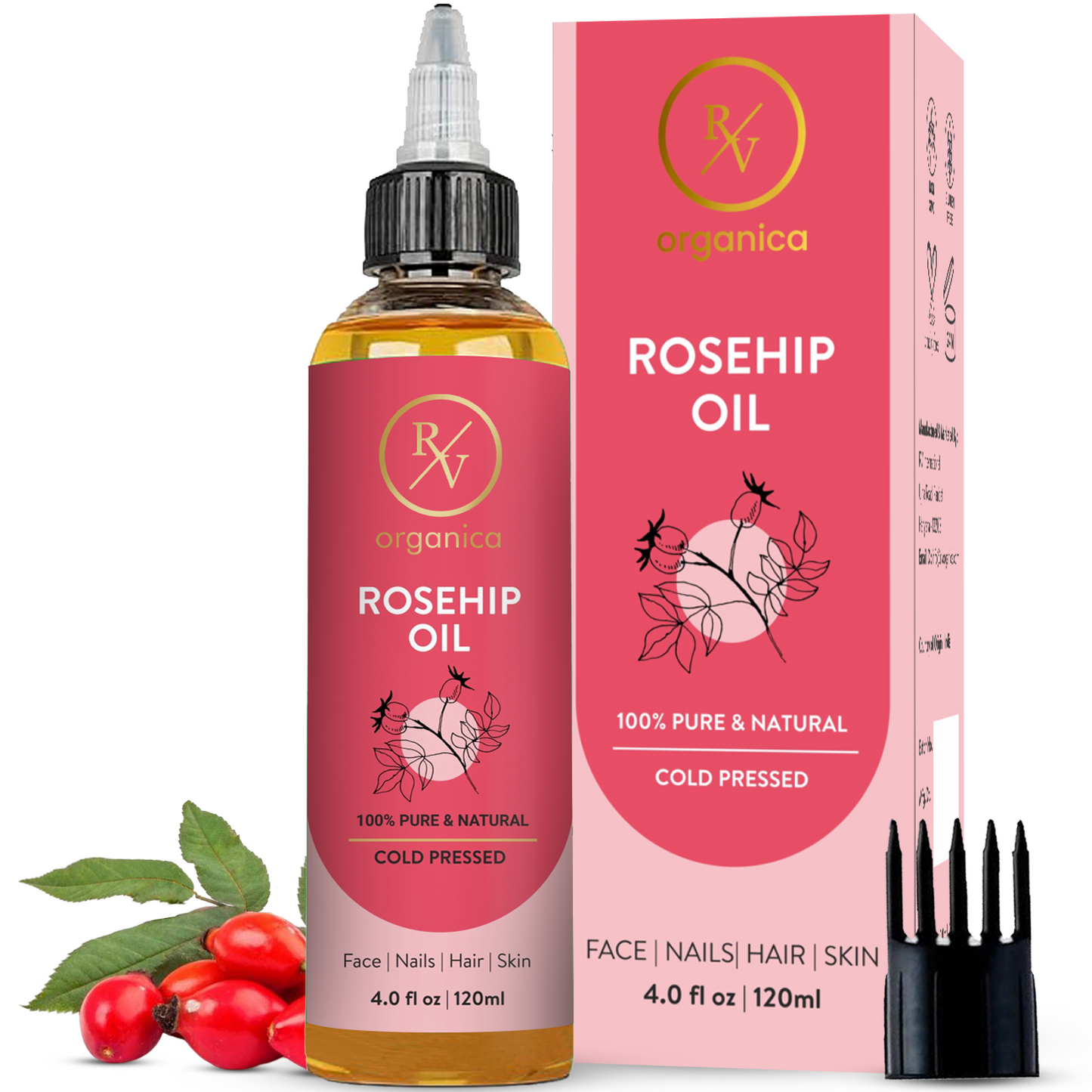
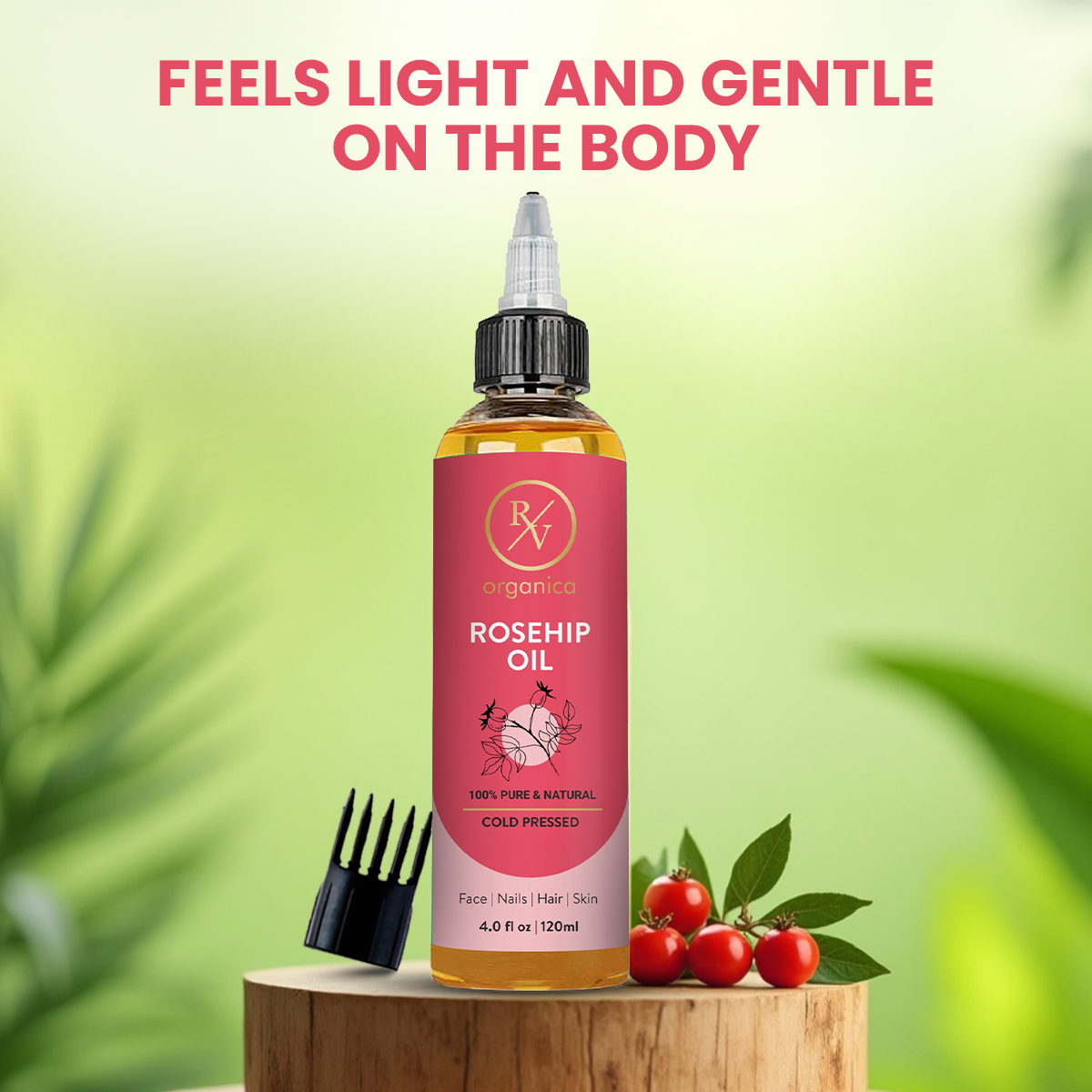
Rosehip oil is cold pressed from the seeds of the rosehip fruit, the part of the rose plant left behind after the flower blooms and fades. RV Organica's Rosehip Oil is 100% pure and natural, cold pressed, and supplied in a 120ml (4.0 fl oz) bottle formulated for use across face, nails, hair, and general skin care.
What makes rosehip oil different from other facial oils
Rosehip oil is high in linoleic acid, an essential fatty acid that makes it absorb faster and sit lighter on skin compared to more occlusive oils like olive or coconut. This is one of the main reasons it's positioned for facial use specifically rather than as a general body oil, since linoleic-acid-dominant oils tend to suit oily, combination, and acne-prone skin better than heavier oleic-acid oils. It also carries natural vitamin A precursors (provitamin A) and vitamin C, compounds associated in existing research with supporting skin texture and mild photoaging concerns, though most of that research uses concentrated extracts rather than the amounts present in a home-use application.
Unrefined, cold pressed rosehip oil has a distinct orange-red tint, a visible sign of its carotenoid content. Oil that appears pale yellow or water-clear despite being labeled rosehip has typically been refined or diluted, which strips out much of the pigment-linked compound content that unrefined rosehip oil is valued for in the first place.
How to use rosehip oil for face, nails, hair, and skin
For facial use, a few drops applied to clean, slightly damp skin absorb more evenly than application to fully dry skin, since rosehip oil's lighter texture works well layered under a moisturizer rather than used as a heavy standalone treatment. Consistent use over several weeks tends to show more noticeable results for texture and dryness than occasional application, since rosehip oil's active compounds work cumulatively rather than instantly.
For nails and cuticles, rosehip oil is massaged directly into the nail bed and surrounding skin to help with dryness and brittleness, a use case that draws on the same fatty acid profile that benefits facial skin. For hair, it's typically applied to the ends and lengths rather than the scalp, since its lightweight texture reduces frizz and adds shine without the heaviness that thicker oils can leave on finer hair types. On the body more broadly, rosehip oil suits areas of dry or rough skin, though its higher price point relative to heavier carrier oils generally makes it more practical as a targeted treatment than an all-over body oil.
Why rosehip oil needs patience and careful storage
Rosehip oil is one of the more fragile carrier oils in terms of shelf stability. Its high unsaturated fatty acid content, the same feature that makes it absorb quickly and work well on skin, also makes it more prone to oxidation than heavier, more saturated oils like coconut or castor. Buying smaller quantities that get used within a few months, storing away from direct heat and sunlight, and refrigerating after opening in warmer climates all extend usable shelf life meaningfully.
Visible signs of oxidized rosehip oil include a shift toward a duller, more brownish tone and a change in smell toward something sharper or slightly rancid compared to the oil's typical mild, slightly nutty scent. Oil showing either of these signs is past its effective window even if the bottle hasn't reached its printed expiry date, since storage conditions affect oxidation speed more than the calendar does.
What results to actually expect from rosehip oil
Clinical research on rosehip oil's effects on skin texture and photoaging typically shows results after six to eight weeks of consistent use, and that research generally uses concentrated extracts rather than the dilutions present in a standard cold pressed retail oil. This doesn't mean rosehip oil doesn't work at home-use concentrations, but it does mean visible change is a gradual process rather than something noticeable within the first week or two of use. Setting that expectation upfront avoids the common pattern of discontinuing use just before cumulative benefits would typically become apparent.
About RV Organica
RV Organica's Rosehip Oil is 100% pure, natural, and cold pressed, supplied in a 120ml (4.0 fl oz) bottle for face, nail, hair, and skin use. The product is manufactured at RV Organica's facility in Nimbri, Panipat, Haryana, with COA and MSDS documentation available on request, and sits within RV Organica's broader face and body massage oils collection alongside other cold pressed carrier oils.
Frequently asked questions
What does cold pressed mean for rosehip oil, and why does it matter? Cold pressing extracts the oil without applying heat above roughly 49°C, which preserves heat-sensitive compounds like vitamin A precursors and carotenoids that get degraded during standard heat-and-solvent refining. This is why unrefined, cold pressed rosehip oil carries a distinct orange-red tint rather than being pale or colorless.
Is rosehip oil suitable for oily or acne-prone skin? Yes, generally. Rosehip oil is high in linoleic acid rather than oleic acid, which typically makes it absorb faster and sit lighter on skin, a profile that suits oily and combination skin better than heavier, more occlusive oils.
How long does rosehip oil take to show visible results on skin? Most research on rosehip oil's effects on texture and photoaging shows results after six to eight weeks of consistent use, based on studies using concentrated extracts. Home-use results may take a similar or slightly longer timeline depending on concentration and frequency of use.
Can rosehip oil be used on hair as well as skin? Yes, typically applied to the ends and lengths of hair rather than the scalp, since its lightweight texture reduces frizz and adds shine without weighing down finer hair types the way heavier oils can.
How should rosehip oil be stored to prevent it going rancid? In a cool, dark place away from direct sunlight and heat, ideally refrigerated after opening in warmer climates, since rosehip oil's high unsaturated fatty acid content makes it more prone to oxidation than heavier carrier oils. A duller color or sharper, rancid smell signals the oil is past its effective window.


Product Specification
| Product Name | Rosehip Oil for Hair Repair – Cold Pressed |
|---|---|
| Botanical Name | Rosa canina L. (Dog Rose) |
| CAS No | 84603-93-0 / 84696-47-9 |
| Country of Origin | Chile / Bulgaria / India |
| F.E.M.A # | N/A |
| Specific Gravity | 0.920 – 0.940 g/ml @ 20°C |
| Moisture Content | NMT 0.1% |
| Refractive Index | 1.467 – 1.487 @ 20°C |
| Flash Point | >215°C (419°F) |
| Acid Value | NMT 5.0 mg KOH/g |
| Relative Density | 0.920 – 0.940 |
| Form | Liquid |
| Consistency | Thin to Medium Liquid (fast-absorbing) |
| Shelf Life | 2 Years from Manufacturing Date (highly unsaturated – store in cool, dark place) |
| Packaging Type | Amber Glass Bottles / HDPE Bottles / HDPE Drums |
| Extraction or Processing Method | Cold Pressed (from seeds of Rosa canina fruit / hip) |
| Solubility | Insoluble in water; soluble in fixed oils and organic solvents |
| Color & Odor | Reddish-orange to golden liquid; mild, characteristic earthy-nutty odor |
| Major Constituents | Linoleic Acid (C18:2) 35–60%, Linolenic Acid (C18:3) 10–50%, Oleic Acid (C18:1) 13–30%, Palmitic Acid 2–10%, Trans-Retinoic Acid (natural Vitamin A), Vitamin C |
| Blends With | Argan Oil, Jojoba Oil, Vitamin E Oil, Castor Oil, Lavender EO, Rosemary EO, Geranium EO |

- Choosing a selection results in a full page refresh.
- Opens in a new window.