


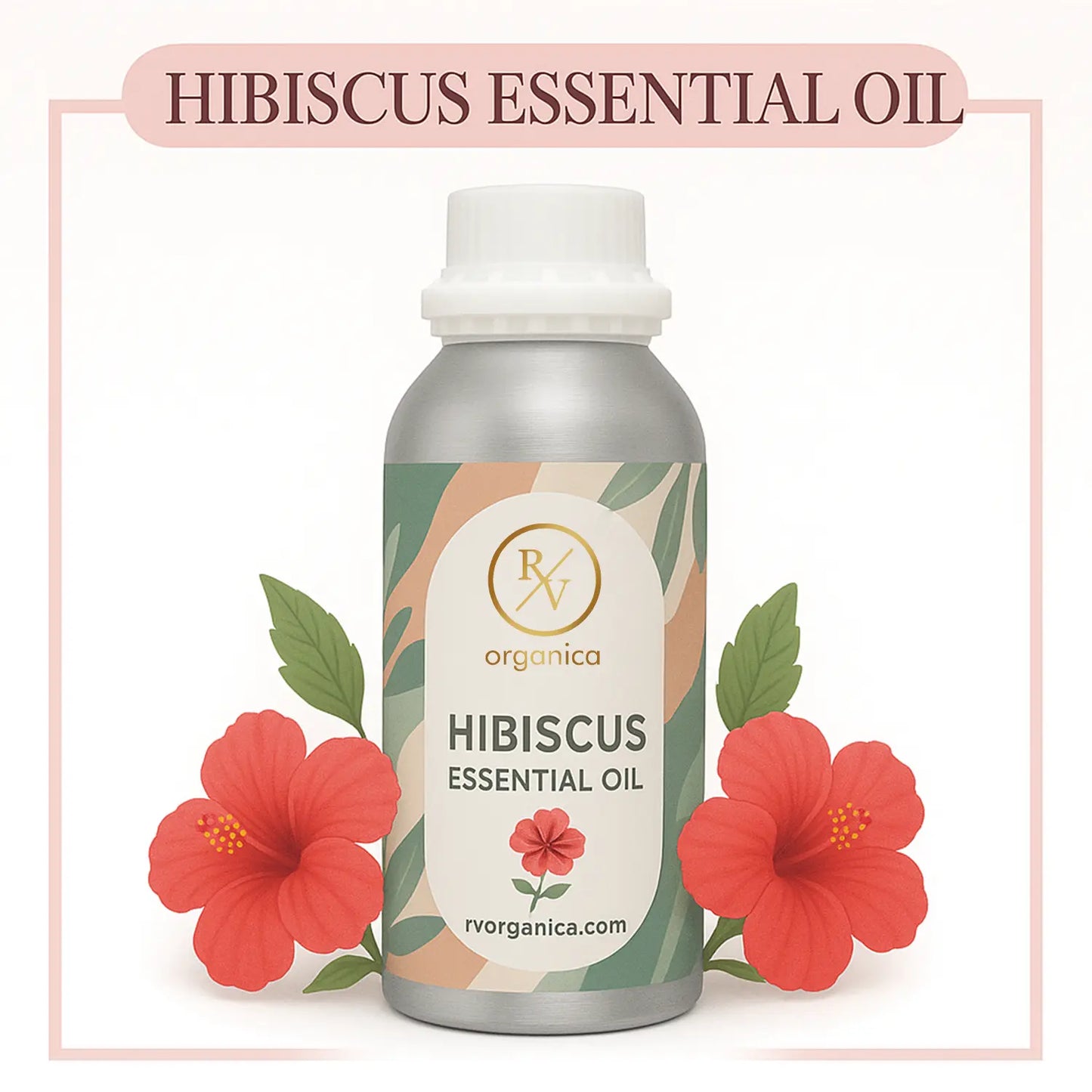
Hibiscus Essential Oil
100% Pure & Natural | Promotes Hair Growth (When Diluted) | Enhances Skin Glow (When Diluted) | Boosts Radiance
- Unlock 10% OFFON FIRST ORDER ABOVE ₹1499
- Flat 10% OFF Navratri SaleOn all orders
- Flat 12% OFFABOVE ₹25,000
- Flat 13% OFFABOVE ₹50,000
- Flat 14% OFFABOVE ₹75,000
- Flat 15% OFFABOVE ₹1,00,000
Need large quantity? Contact us for bulk orders →
Couldn't load pickup availability
Frequently Bought Together

Hibiscus Essential Oil
Rs. 479.00

Rose Fragrance Oil
Rs. 2,000.00

Aniseed Carrier Oil
Rs. 399.00


Our Certifications


Recently Viewed
Hibiscus Essential Oil A Powerful Solution for Hair and Skin Health
Quick answer: Hibiscus Essential Oil, also called Gudhal oil, is a solvent-extracted oil from hibiscus flowers with a soft, sweet, floral and earthy scent. It is mainly used in hair oils, scalp blends, face oils and natural cosmetics. It comes in 100 ml and 500 ml bottles for home use and 1 kg to 25 kg packs for brands and bulk buyers.
Hibiscus Essential Oil, also known as Gudhal Oil, is derived from the leaves and flowers of the hibiscus plant and carries essential nutrients including vitamin A, vitamin C, amino acids, and alpha-hydroxy acids (AHAs). RV Organica's Hibiscus Essential Oil is valued in both haircare and skincare for its antioxidant content, with a particular reputation for deep conditioning and scalp nourishment.
What makes hibiscus oil effective for hair and skin
Hibiscus oil's benefits trace back primarily to two compound groups: anthocyanins, the pigment compounds responsible for the plant's deep red color, and alpha-hydroxy acids, which are more commonly associated with skin exfoliation and cell turnover. Anthocyanins carry meaningful antioxidant activity, helping protect hair follicles and skin cells from oxidative stress that contributes to premature aging and follicle weakening over time. The AHA content is what separates hibiscus from most other hair oils in this category, since alpha-hydroxy acids gently support surface cell turnover on the scalp, an effect more commonly associated with skincare actives than with traditional hair oils.
Vitamin A and vitamin C round out the nutrient profile, both contributing to the oil's antioxidant load and supporting general tissue health at the surface level. Traditional Ayurvedic use of hibiscus, known as gudhal in Hindi, has centered on hair care specifically for generations, predating any of the modern compound-level research explaining why the practice worked as well as it did.
How hibiscus oil is used for hair
Hibiscus oil is typically massaged into the scalp and left on for 30 minutes to a few hours before washing out, a pattern consistent with most scalp-focused treatment oils rather than a leave-in product. The oil is commonly associated with reducing hair fall, supporting thicker-looking hair over time, and adding shine, benefits attributed to its combined antioxidant and conditioning effect on both the scalp and hair shaft. For dandruff or scalp dryness specifically, hibiscus oil's AHA content may help with mild flaking, though persistent or severe scalp conditions are better addressed with a dermatologist's input alongside any oil-based routine.
Consistency matters more than the amount applied in any single session. Hibiscus oil, like most botanical scalp treatments, works cumulatively rather than instantly, so a twice-weekly routine sustained over several weeks tends to show more noticeable results than occasional heavy application.
How hibiscus oil is used for skin
On skin, hibiscus oil's anthocyanin and AHA content position it for cleansing and skin-regenerating use, applied in small amounts to clean skin either on its own or blended into a broader facial oil routine. Its mild AHA activity makes it a gentler alternative to stronger synthetic exfoliants for people wanting the surface cell-turnover benefit without a harsher treatment, though it should still be patch tested before regular facial use given the natural variability in AHA concentration across different hibiscus oil batches.
Hibiscus oil is often layered with lighter carrier oils rather than used at full strength on the face, since this allows the active compounds to be delivered without overwhelming more sensitive skin. Its skin benefits, similar to its hair benefits, build gradually over consistent use rather than showing an immediate visible effect.
How to choose a quality hibiscus essential oil
Because hibiscus oil's benefits depend heavily on its anthocyanin and AHA content, extraction method and freshness matter more here than with some other carrier or essential oils. Oils extracted through gentler methods and processed without excessive heat retain more of these heat-sensitive compounds than oils pushed through faster, high-heat extraction. A COA (Certificate of Analysis) confirming the oil's composition is the most reliable way to verify quality beyond scent and color, particularly for buyers formulating their own hair or skincare products rather than using the oil directly from the bottle.
Storage also affects potency over time. Hibiscus oil should be kept away from direct sunlight and excessive heat, since both accelerate the breakdown of anthocyanins and other heat-sensitive compounds that account for much of the oil's activity.
What are the specifications of Hibiscus Essential Oil?
The botanical source is Hibiscus rosa-sinensis, and the oil is produced in India by solvent extraction from hibiscus flowers. It is a pale yellow to golden liquid with a characteristic floral, sweet, earthy hibiscus scent. Typical values are a specific gravity of about 0.918, a refractive index of 1.462 and a flash point above 75 °C. It dissolves in alcohol and fixed (carrier) oils and does not dissolve in water, and it keeps for 2 years when stored sealed in a cool, dark place. Exact values for each batch are listed on its Certificate of Analysis.
What pack sizes and bulk options are available for Hibiscus Essential Oil?
RV Organica sells Hibiscus Essential Oil in 100 ml and 500 ml bottles for home users and small makers, and in 1 kg, 5 kg, 10 kg, 20 kg and 25 kg packs for perfume, cosmetic, soap, candle and aromatherapy brands. Every size comes from the same batch process at our facility in Nimbri, Panipat, so a brand can test a small bottle first and then reorder in bulk with a consistent aroma. For quantities above 25 kg, regular monthly supply or private label orders, write to info@rvorganica.com or call +91 8937003005.
How is Hibiscus Essential Oil shipped and what quality documents come with it?
Orders are packed in sealed containers and dispatched from Nimbri, Panipat, Haryana, and shipped across India, with free delivery on orders above ₹999; we also export to overseas buyers. Each batch is checked before dispatch, and a Certificate of Analysis (COA) and Material Safety Data Sheet (MSDS) are available for every batch, which most brands need for their records and compliance. Patch test before first use and use it diluted in your hair or skin blends; it is for external use only.
About RV Organica
RV Organica's Hibiscus Essential Oil, also known as Gudhal Oil, is derived from hibiscus leaves and flowers and formulated for hair and skin use. The product is manufactured at RV Organica's facility in Nimbri, Panipat, Haryana, with COA and MSDS documentation available on request, and can be ordered directly through RV Organica's Hibiscus Essential Oil product page.
Frequently asked questions
What is hibiscus essential oil also known as? It's commonly called Gudhal Oil in Hindi, derived from the leaves and flowers of the hibiscus plant and used traditionally in Ayurvedic hair care for generations.
How should hibiscus oil be used for hair fall and scalp health? Massage the oil into the scalp and leave it on for 30 minutes to a few hours before washing out, ideally applied consistently two times a week over several weeks, since the antioxidant and conditioning effects build gradually rather than showing immediate results.
Can hibiscus oil be used on skin, not just hair? Yes. Its anthocyanin and alpha-hydroxy acid content supports cleansing and mild skin-regenerating effects, typically applied in small amounts to clean skin or blended into a broader facial oil routine, with a patch test recommended before regular use.
What compounds make hibiscus oil effective for hair and skin? Anthocyanins, the pigment responsible for the plant's red color, provide antioxidant activity, while alpha-hydroxy acids support surface cell turnover on the scalp and skin, an effect less commonly found in traditional hair oils.
How long does it take to see results from hibiscus oil? Results typically build over several weeks of consistent use rather than appearing after a single or occasional application, since hibiscus oil's antioxidant and AHA-related benefits work cumulatively on the scalp and skin.
Product Specification
| Product Name | Hibiscus Essential Oil |
|---|---|
| Botanical Name | Hibiscus rosa-sinensis |
| CAS No | 84775-91-7 |
| Country of Origin | India |
| F.E.M.A # | Not Assigned |
| Specific Gravity | 0.918 g/ml |
| Moisture Content | ≤ 0.5% |
| Refractive Index | 1.462 |
| Flash Point | >75°C |
| Acid Value | ≤ 2.0 mg KOH/g |
| Relative Density | 0.918 g/ml @ 25°C |
| Form | Liquid |
| Consistency | Thin to Medium |
| Shelf Life | 2 Years |
| Packaging Type | As Per Requirement |
| Extraction or Processing Method | Solvent Extraction from Hibiscus Flowers |
| Solubility | Soluble in Alcohol & Fixed Oils, Insoluble in Water |
| Color & Odor | Pale Yellow to Golden; Characteristic Floral, Sweet, Earthy Hibiscus Scent |
| Major Constituents | Linoleic Acid, Oleic Acid, Palmitic Acid, Stearic Acid |
| Blends With | Rose, Jasmine, Lavender, Geranium, Ylang Ylang, Sandalwood, Neroli, Frankincense |
| COA | View COA |
| MSDS | View MSDS |
CAUTION: It is meant only for external use. Do a patch skin test before applying it to your skin. Dilute it before topical application. Avoid direct exposure to sunlight. Pregnant women should consult a doctor before using it.

- Choosing a selection results in a full page refresh.
- Opens in a new window.
